

Product context
Identify the product and lot information that accompanies each serialized unit.
Connect downstream product records and partner exchanges with the serialized information coming from your pharmaceutical operation.
 SAME DATA. FURTHER GOOD.
The identifier is one part of the record. Downstream teams also need to understand the product, the movement and the information that accompanies it. Review the handoff between your serialization environment and your trading partners.
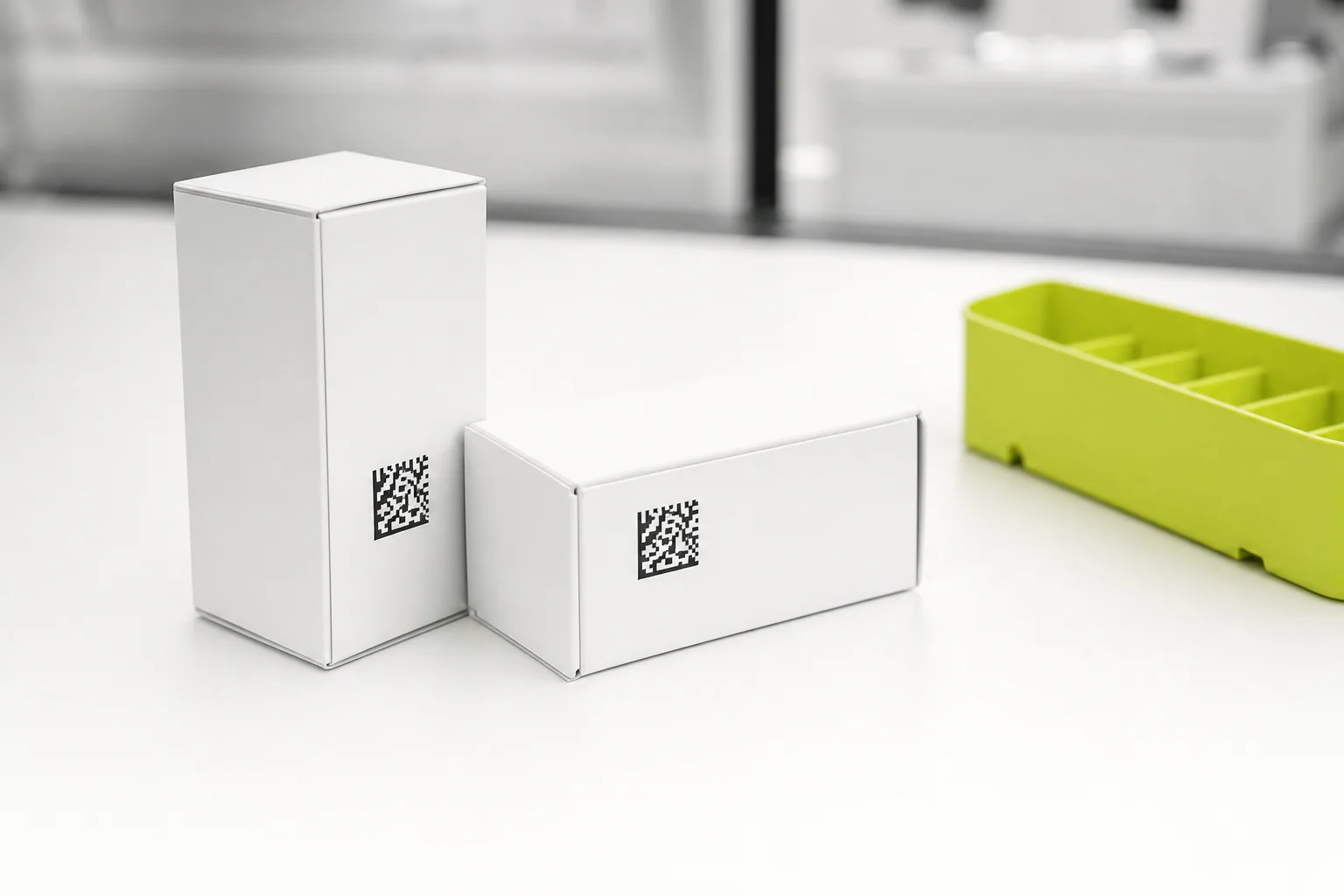
Identify the product and lot information that accompanies each serialized unit.
Establish the event data relevant to the downstream transaction.
Agree on the expected format, identifiers and delivery response.
A manufacturer has a serialized unit in its source environment, but the downstream partner needs an understandable event record. The integration connects product master data and operational context with the agreed exchange. A successful handoff requires compatible identifiers and meaning, in addition to a delivered file.
Identify product, lot and unit-level information.
Add the relevant activity, time and location.
Prepare the agreed event representation.
Relate technical and business responses to the exchange.
ILLUSTRATIVE WORKFLOW · THE IMPLEMENTATION FOLLOWS YOUR OPERATING REQUIREMENTS
Start with one representative product movement and a partner specification. Demonstrate how the source data becomes a usable record and how a partner receives the associated document. Include an exception in the test.
This page describes the management and exchange of serialized product data. Serial generation, printing, inspection hardware and physical aggregation are separate requirements to discuss explicitly.

Companies the Maltexi team has worked with.

Connect product identifiers, event data and trading-partner requirements in a clearly scoped exchange.
Explore epcis integrationMove from a serial number to the product, lot, location and events associated with that item.
Explore serialized product recordsPlan the path between your operational systems, serialized product records and the organizations you exchange data with.
Explore integrationsUse real workflows, representative data and clear acceptance criteria to shape the implementation conversation.
Explore implementationYour systems. Your partners. The task you need to complete.
Discuss your workflow